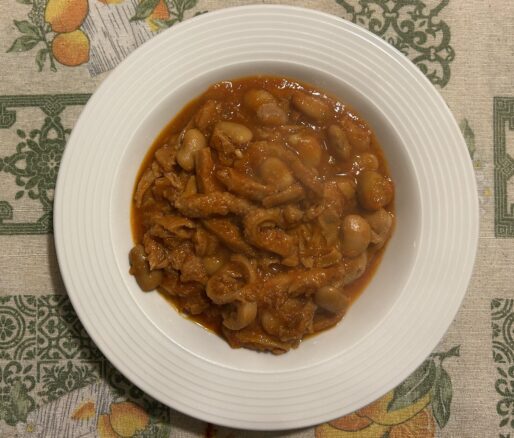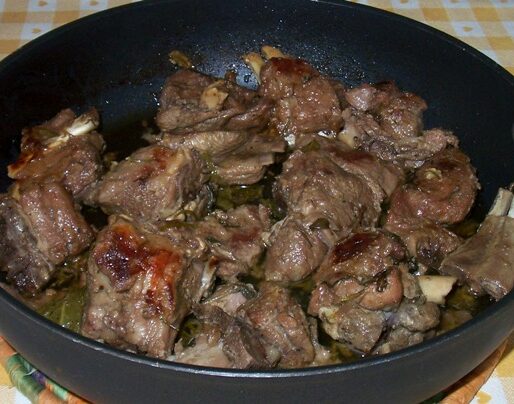


Polenta is a traditional staple of Northern Italy with a rustic and authentic flavor, perfect for accompanying meats, stews, or classic dishes like casoeula. If you have leftovers, they can be used the next day for home-style comfort dishes like polenta with milk or polenta with cheese.
The polenta shown in the photo is made with a flour blend: classic yellow cornmeal mixed with buckwheat flour. This style of polenta is widely used in the Valtellina region and serves as the base for the famous Polenta Taragna, which includes added butter and cheese. You can buy a pre-made mix or create your own with a 2:1 ratio of buckwheat flour to yellow cornmeal.

Let’s be honest… making traditional polenta without an electric copper pot stirrer (paiolo) is a real challenge because you have to stir continuously for over an hour. As the flour begins to compact and thicken, the task becomes increasingly strenuous.
An electric copper pot is a must-have in any home for making polenta. Here is a list of some great alternatives.
Of course, there is always the option of using instant polenta, but I assure you the result won’t be the same. Not to mention the processing that instant flour undergoes.
Pour the water into your polenta pot and bring it to a boil.
Slowly rain in the corn and buckwheat flour blend, whisking or stirring continuously to prevent lumps from forming.
Continue cooking for about an hour, stirring constantly with a wooden spoon. If you have a dedicated polenta pot, now is the time to attach the electric stirrer (paiolo) and let it mix the polenta slowly and steadily. This will make the process much easier.
The polenta is ready when it pulls away easily from the sides of the pot, forming a single compact mass. When using this type of flour in a copper pot with an electric stirrer, you will notice a golden crust on the walls of the pot at the end. Don't throw it away! It detaches easily in one piece (like a shell) and is delicious, crispy, and tastes similar to nachos—perfect for placing in the center of the table for everyone to share.
Invert the pot with a firm motion to turn the polenta out onto a wooden board. Let it rest for 10 minutes, then slice it using a piece of cotton or nylon thread, as tradition dictates, or with a wooden knife.
A copper pot (paiolo) and high-quality water are fundamental components for achieving the best polenta flavor.
The quality of the water significantly impacts the final taste, which is why polenta prepared in the mountains with fresh spring water is considered the absolute best.