


This is a traditional and timeless recipe for Bolognese meat sauce (Ragù alla Bolognese). Bolognese sauce is a recipe exported all over the world. You will find countless recipes promising to replicate the original version, even the one officially registered with the Bologna Chamber of Commerce. My recipe, however, is more typical of the Northern Italian tradition—it’s ‘redder’ (without milk and broth) thanks to the tomato purée. This style of ragù is a family heirloom passed down to me. It’s the one we use for lasagna, tagliatelle or simply for a bowl of pasta that is always a favorite with our children.
Rich and flavorful, this sauce is perfect for preparing in advance and storing in the freezer, ensuring you always have an authentic and delicious condiment on hand. It’s ideal for a quick lunch that brings all the warmth, tradition, and aromas of genuine Italian home cooking to your table.
While the meat is browning—especially if you are using sausage instead of Prosciutto Crudo—you can mash it with a manual potato masher to prevent clumps from forming. At this link, you can find some price references. Make sure to choose a stainless steel one, as plastic ones don’t last long

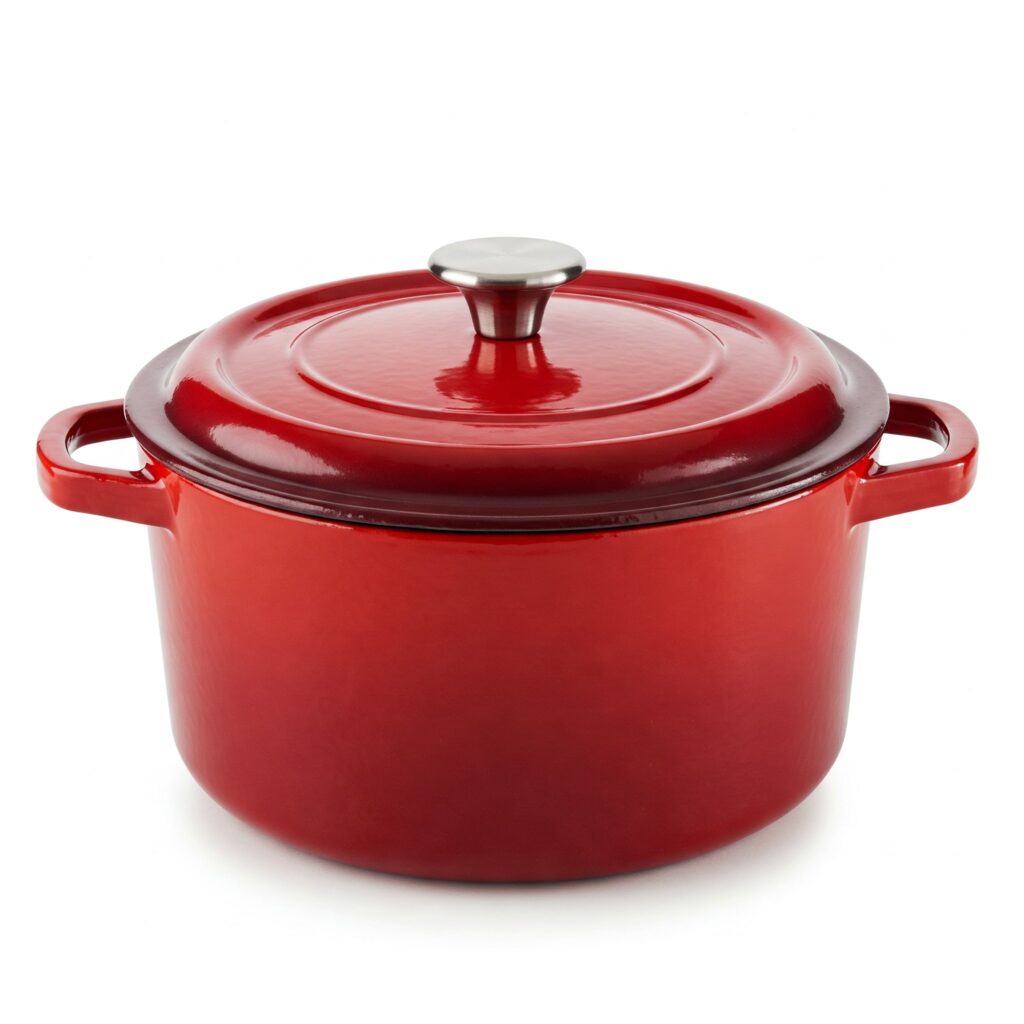
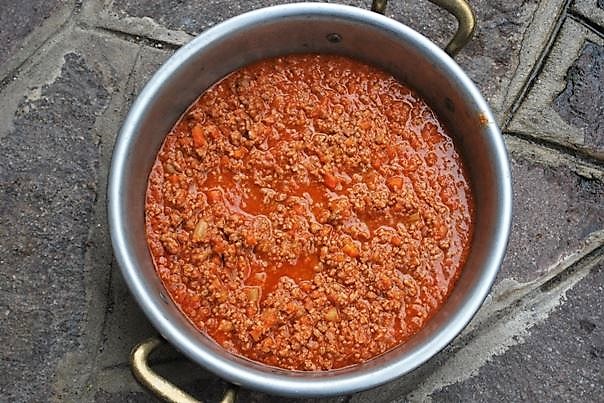
High-quality cast iron pots are quite expensive but are perfect for the slow-cooking required for dishes like ragù or braised meats (Brasati). Don’t be fooled by low-cost versions. The ragù in the photo, however, was made in a traditional copper pot.
Guide to best pots for slow cooking: CAST IRON VS. COPPER
Finely mince the carrot, celery, and onion. Place them in a large pot—cast iron or copper pots are ideal for ensuring slow and even cooking—and sauté for a few minutes over low heat with plenty of extra virgin olive oil (at least half a standard drinking glass).
Add the ground beef and ground pork to the sautéed vegetables. Slightly increase the heat and brown for 5–10 minutes, stirring frequently to prevent the meat from sticking. During this stage, try to break up the meat well with a wooden spoon for a consistent texture.
Deglaze with the red wine. Once the alcohol has completely evaporated, add the finely minced Prosciutto Crudo (the real secret to this recipe), the tomato purée, the fresh basil leaves, and a crack of black pepper. You will immediately notice the deep red color that characterizes this family version.
Bring to a boil, then reduce the heat to the lowest setting on your smallest burner and cover with a lid. Let the ragu cook for 3 hours, stirring occasionally. If the sauce thickens too much, you can add a little warm water.
Toward the end of the cooking time, adjust the salt, being careful because the Prosciutto Crudo is already very savory. The ragu will be ready when it reaches a slightly thick consistency. You will also notice it from the color: it will tend to become dark red, especially the liquid part on the surface.
The real secret of this recipe? The Prosciutto Crudo, which provides depth and savoriness. Do not remove the fat, it is exactly what gives the sauce its velvety consistency and full-bodied flavor.
If you don't have Prosciutto Crudo, substitute it with an equal amount of Italian sausage, but add it to the meat during the browning stage. Sausage tends to form clumps; to avoid this, you can mash it directly in the pot with a manual potato masher or vegetable mill.
This sauce freezes beautifully. I recommend freezing it in small glass jars (leaving a little space at the top) so you can defrost exactly the amount you need for a single meal.