


Pastel de Nata (or pastéis de nata) are iconic little baked treats from Portugal, featuring a flaky puff pastry crust and a rich, creamy egg custard filling. Perfect for an indulgent afternoon snack or a refined dessert, these tarts will win you over with the incredible contrast between the crunchy, golden exterior and the soft, sweet center. Make them at home following this fool-proof recipe that guarantees bakery-style results without the stress.
The Pastel de Nata originated in Portugal, specifically in the Belém district of Lisbon. Centuries ago, they were created by monks at the Jerónimos Monastery. When many monasteries were closed in the early 19th century, the secret recipe was sold to a local sugar refinery, whose owners eventually opened the Fábrica de Pastéis de Belém in 1837. Today, this treat is beloved not just across Portugal, but in all Portuguese-speaking countries (like Brazil, Angola, and Mozambique) and has become a global obsession.
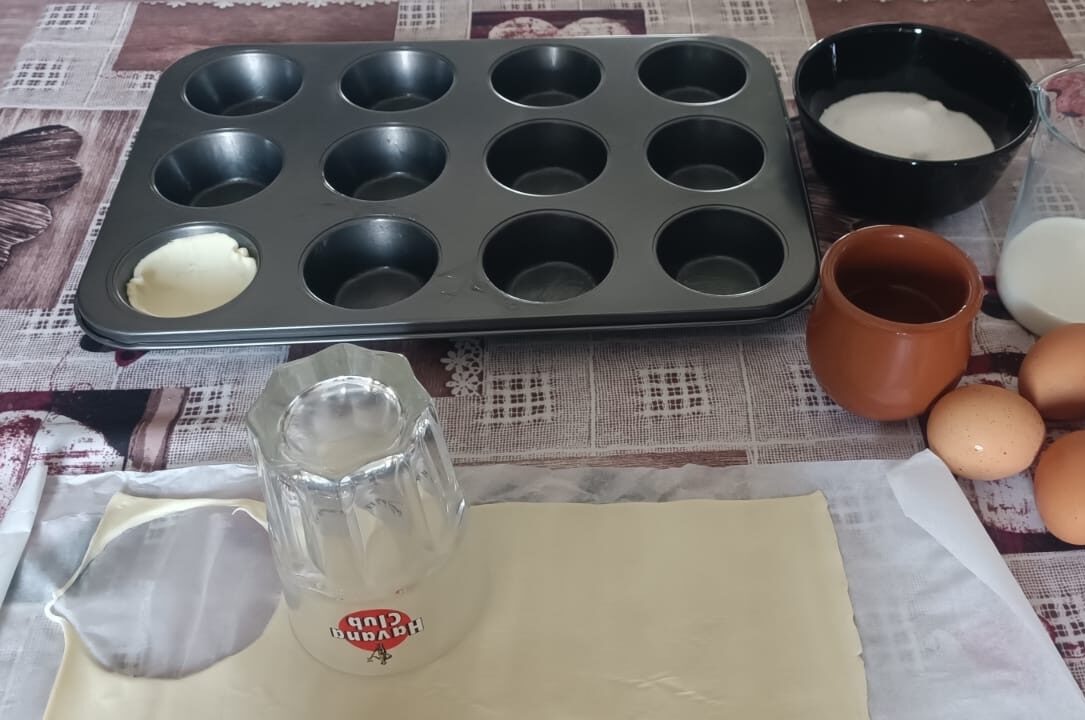
There are two ways to handle the pastry. The classic method involves rolling the rectangular sheet into a tight log and cutting it into 12 equal spirals. However, for this easy home version, I recommend a faster 'shortcut' method. Simply lay out your cold puff pastry sheet and use a round cookie cutter (or a drinking glass) to cut out 12 discs. Grease a 12-hole muffin tin with a little butter. Place a pastry disc into each muffin cup. Using your thumbs, gently press the dough against the bottom and up the sides to line the cup completely. If you use the spiral method, place a spiral cut-side down and press it out the same way. Place the tin in the fridge while you make the custard.
Grab a small saucepan and pour in about 150 ml (generous ½ cup) of the milk along with the lemon zest strips. Place it over medium heat. Meanwhile, in a small bowl or mug, whisk the flour with the remaining 100 ml (scant ½ cup) of milk until perfectly smooth. As soon as the milk in the saucepan starts to boil and is infused with the lemon aroma, pour in the flour-and-milk mixture. Switch to a whisk and stir energetically. You want to cook this until it thickens into a paste. Once thickened, remove from heat and pass it through a sieve/strainer to remove the lemon zest and any potential lumps.
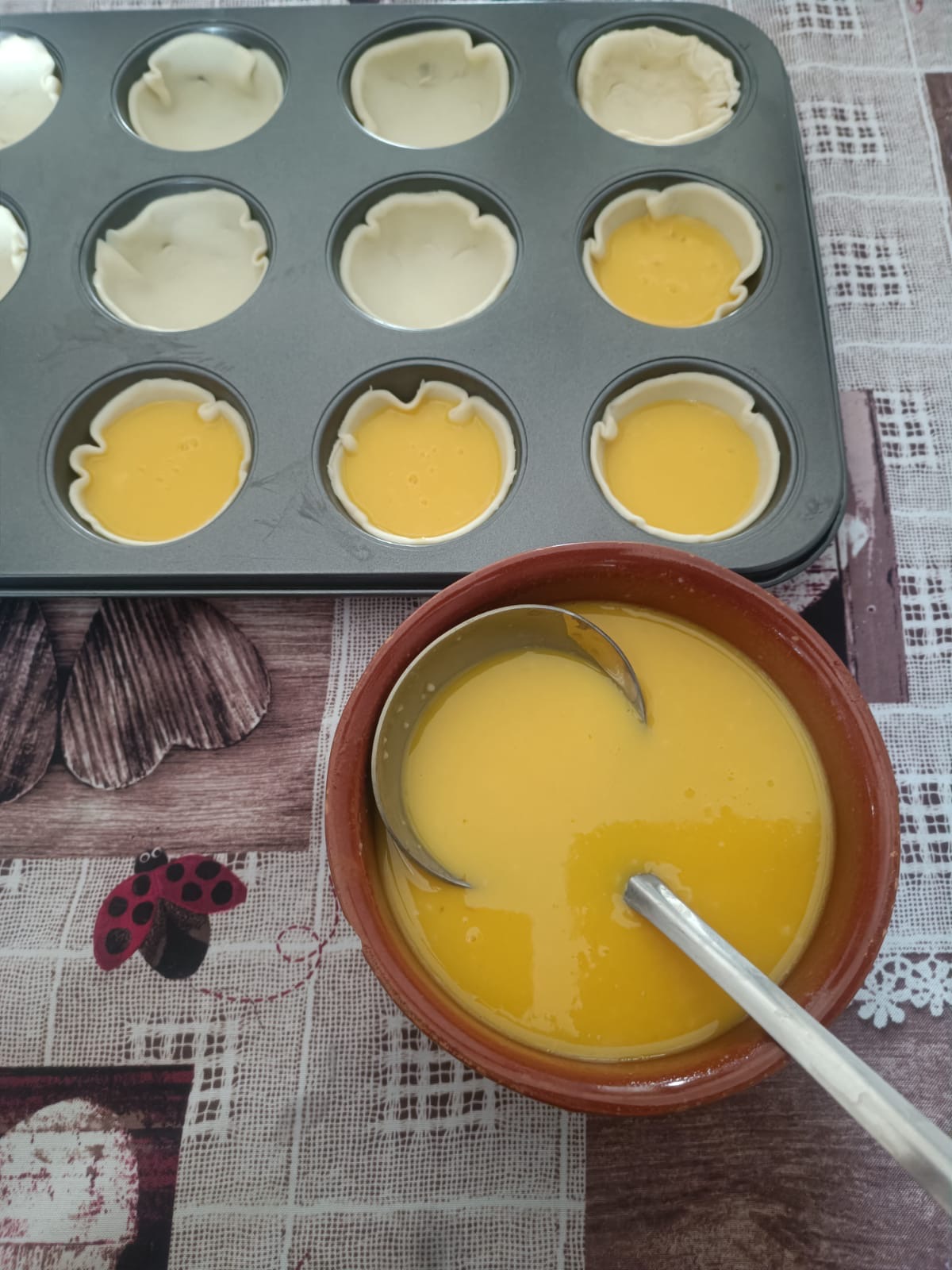
In a separate clean saucepan, combine the water and sugar. Bring it to a boil without stirring and let it simmer for exactly 4 minutes to create a simple syrup. Turn off the heat. Now, slowly pour this hot syrup into your thickened milk base, whisking constantly to incorporate them into a glossy cream. Finally, add the 4 egg yolks and whisk well until everything is combined into a rich, yellow custard.
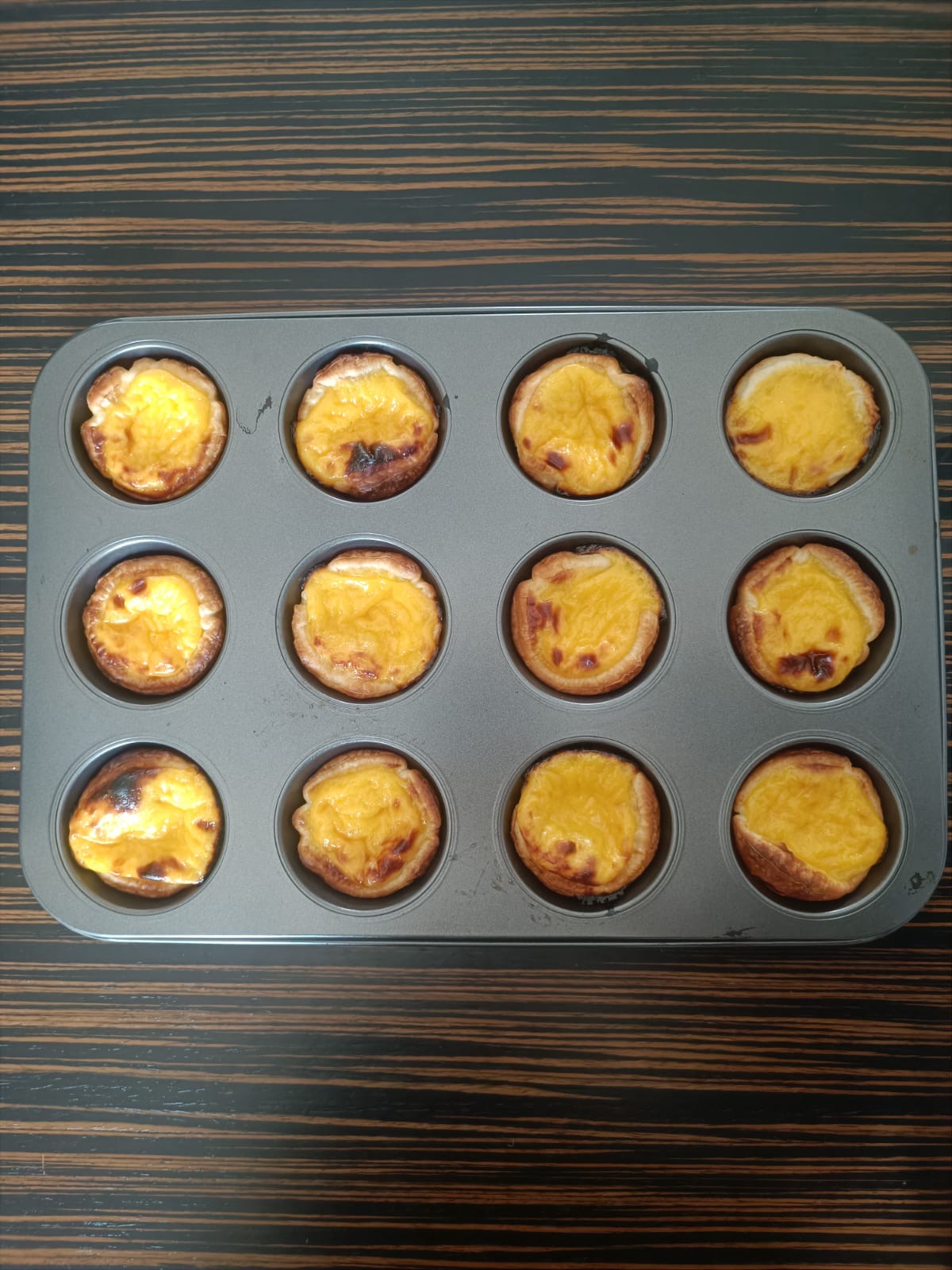
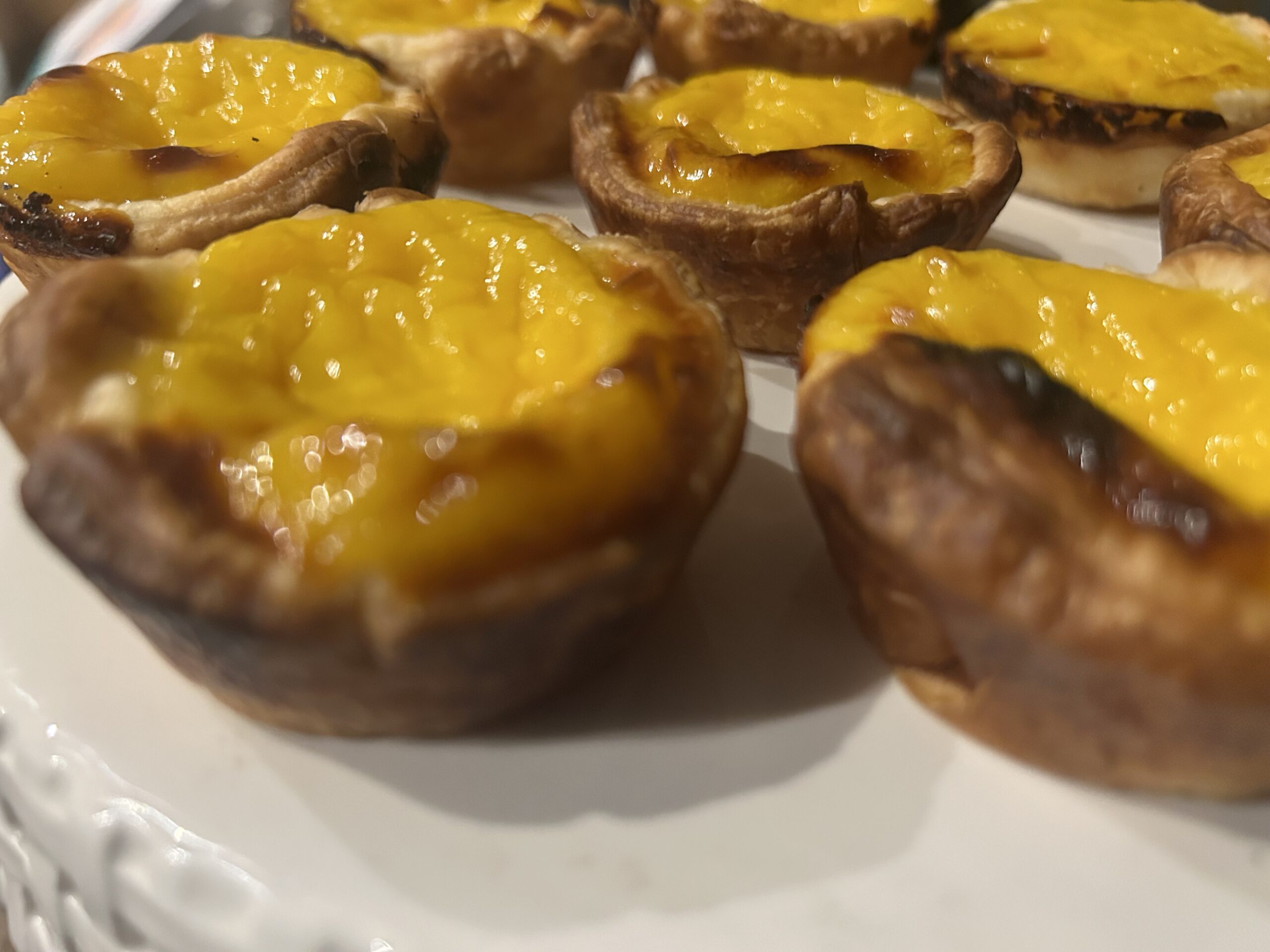
Preheat your oven to 425°F (220°C). Take your muffin tin out of the fridge. Pour the custard into the pastry-lined cups, filling them about ¾ of the way full. Do not overfill, as the cream will bubble up. Bake for approximately 15 minutes. Keep an eye on them: they are ready when the pastry is golden brown and the custard surface has those signature dark brown or black 'leopard spots.' That slightly burnt look is exactly what defines a true Pastel de Nata!
Remove from the oven and let the tarts cool in the pan for a few minutes. Carefully remove them and let them cool further on a wire rack. They are best served warm or at room temperature. For the authentic Portuguese experience, dust them generously with powdered cinnamon just before eating.
The Name Game: The original recipe is a top secret guarded by the "Oficina do Segredo" at the Fábrica dos Pastéis de Belém. Only tarts made there can legally be called "Pastéis de Belém." Everywhere else in Portugal—and the world—they are known as Pastel de Nata (Cream Pastry).
Serving Tip: In Portugal, it is customary to eat these with a strong espresso coffee (bica) and a heavy dusting of cinnamon.
Sweetness Control: You can slightly reduce the sugar in the syrup if you prefer a less sweet dessert, but don't reduce it too much or the texture will change. After your first batch, adjust to your preference!