
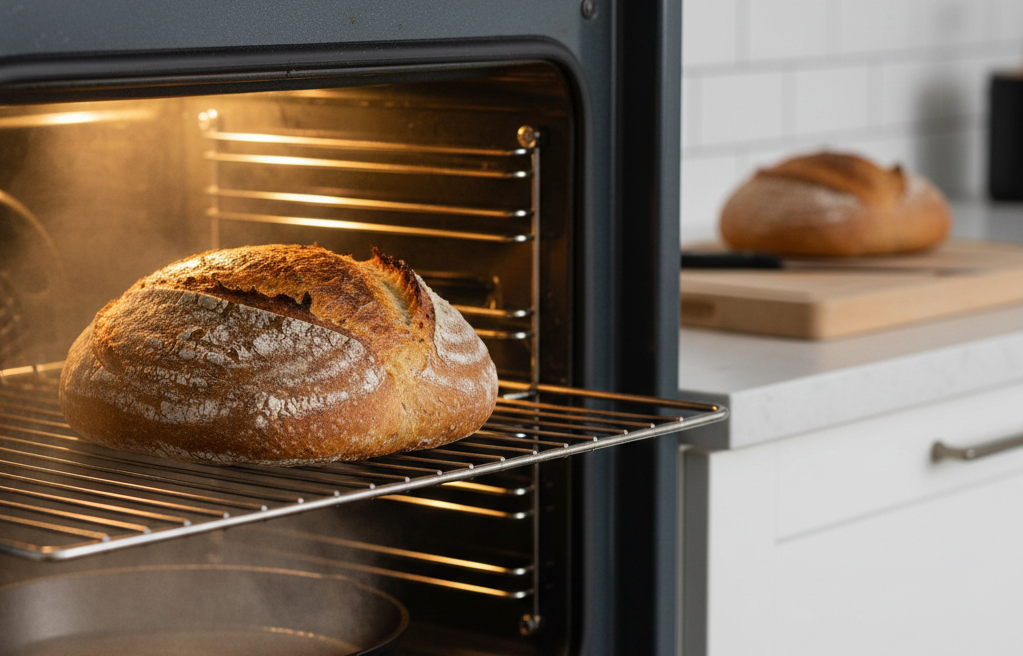
Conventional vs. Convection Mode: Choosing the Right Setting for Baking
Mastering the oven baking mode (Conventional or Convection) on your multifunction oven is crucial and can determine the perfect outcome of your baked goods. The two modes are not interchangeable! Depending on the sweet or savory dish you are preparing, the way heat moves makes all the difference between a gummy result and a soft, golden masterpiece.
Conventional Oven Baking Mode
In this mode, heat comes directly from fixed heating elements (top/bottom) and moves via radiation. This creates a more delicate and generally slower cooking process.
- Ideal for: Items that need to rise slowly and evenly, while retaining internal moisture.
- Perfect for:
- Tall Cakes (e.g., sponge cake, pan di Spagna, Bundt cakes) and all Slow-Rise Yeasted Doughs (bread, panettone, brioche, etc.).
- Lasagnas, Baked Pasta, Timbales, and Casseroles, which must cook through without drying out on the surface too quickly.
- The Advantage: It promotes maximum lift and prevents the premature formation of a hard crust that would block growth. The result is a smoother, more regular surface.
2. Convection Oven Baking Mode
In this mode, a fan (ventilator) distributes heat evenly and constantly throughout the entire oven cavity. This creates a more aggressive and faster cooking process.
- Ideal for: Items that require fast browning, a crispy crust, and uniform cooking across multiple levels.
- Perfect for:
- Cookies, Tarts (Crostate), Pastries, and Meringues, for a crisp and crumbly result.
- Roast Potatoes (Patate al Forno), which will be crispy on the outside and tender on the inside.
- The Added Advantage: It is the only mode suitable for cooking two or more trays simultaneously (e.g., two pizzas or multiple racks of cookies), as the forced circulation ensures that both racks receive the same amount of heat.
The Secret: Adjusting the Temperature
To best manage recipes that specify a mode different from the one you want to use, follow these simple conversion rules:
- From Conventional to Convection: If a recipe calls for Conventional, but you use Convection, reduce the temperature by 25∘F (about 15∘C) and follow the specified baking time.
- From Convection to Conventional: If a recipe calls for Convection, but you use Conventional, increase the temperature by 25∘F (about 15∘C) and expect slightly longer baking times.
Quick Tip: The Broil (Grill) Function
The Broil (Grill) Function uses only the top heating element at maximum power. This should only be used as a finishing cook (maximum 5–10 minutes) to create a perfect crust on dishes like gratins, lasagnas, or baked vegetables.
In summary: Conventional for Lift, Convection for Crispness and Multiple Batch Baking.


